
Listen Here
The Story
On a bluff above the Missouri River, 200 miles from the nearest American settlement, the United States built its largest military post in 1819. Nearly a thousand people called it home: soldiers, officers, families. They were sent to project American power into the frontier, hold back British fur traders, and keep the peace with the surrounding nations: the Pawnee, the Omaha, the Sioux, the Arikara.
In this episode, we step inside the walls with Andrew, a living history re-enactor and Friend of Fort Atkinson, to get a feel for what daily life actually looked like. The rations. The whiskey. The discipline, the isolation, and the particular strangeness of being a soldier at the edge of the known American world.
And we leave you with a question. It was November 1819. A Nebraska winter is closing in. Something was about to go very, very wrong.
Find out next week (May 27, 2026) in Part 2.
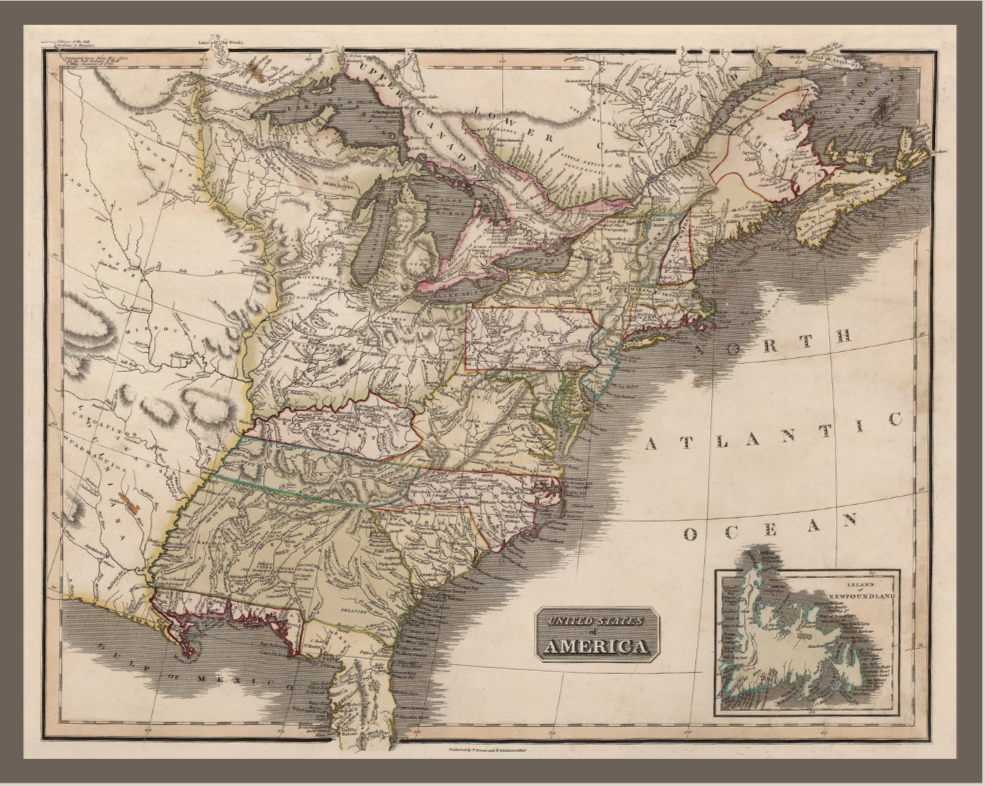
Map of the United States in 1818, showing the states that had been established. On the left side of the map, just above and to the right of the oval, is where the Platte and the Missouri meet, approximately 30 miles from Fort Atkinson.
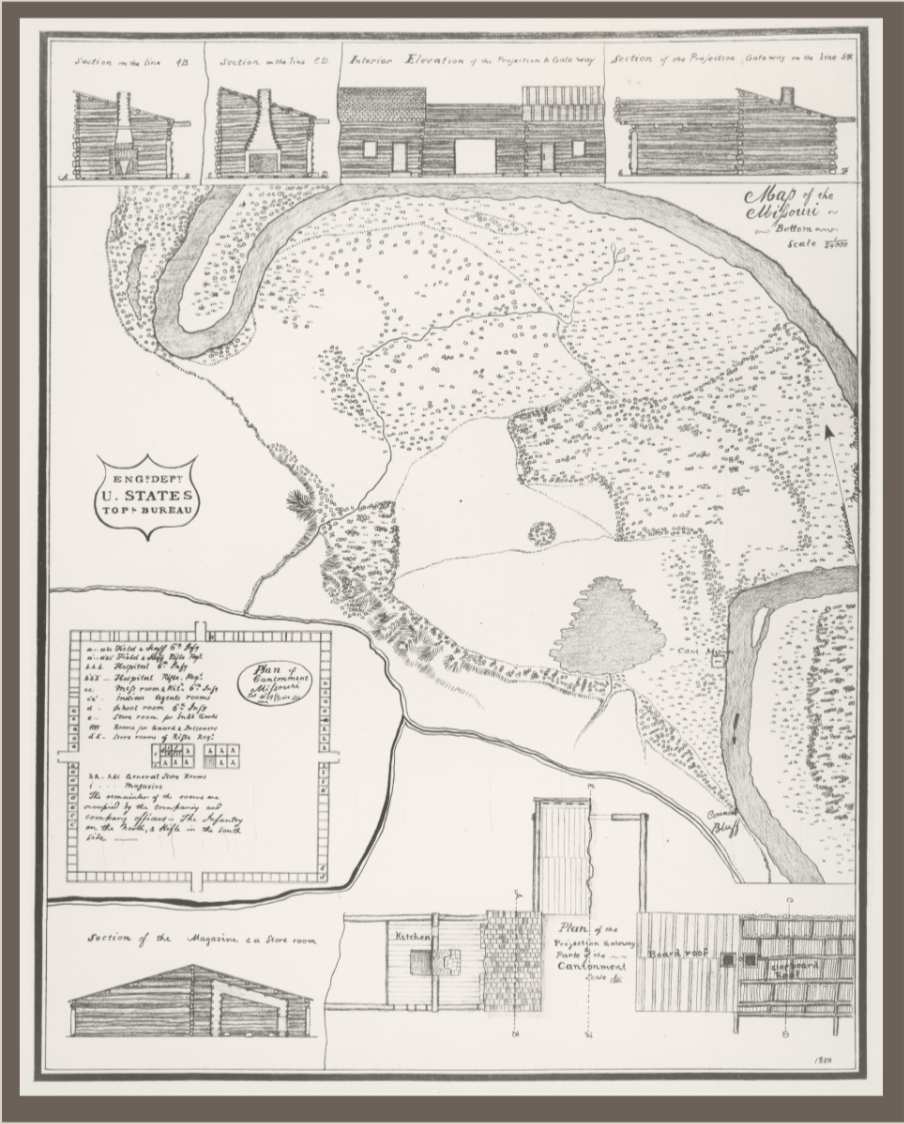
Map and Plan of Cantonment at Missouri River Bottom, 1820
Fort Atkinson State Historical Park Now
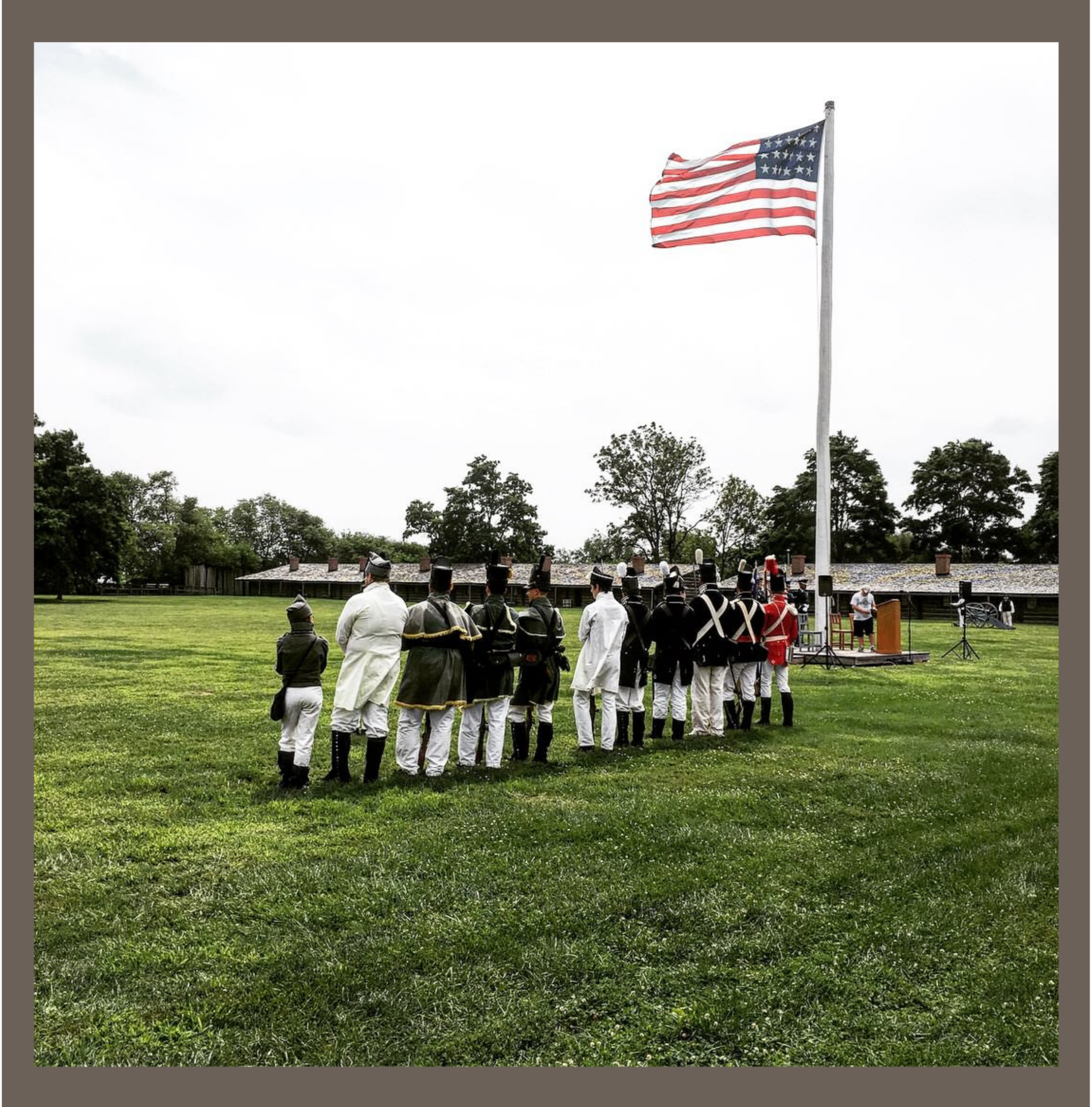
For photos, maps, and glimpses of the past, and a behind the scenes look at what we’re getting into this summer, follow @rootedintheplains on Instagram
Plan Your Visit
Fort Atkinson's next living history weekend is June 6th and 7th, 10 a.m. to 4 p.m. Fort Atkinson State Historical Park, Fort Calhoun, Nebraska. Free with a Nebraska State Park entry permit.
Fort Atkinson State Historical Park — Nebraska Game & Parks
Friends of Fort Atkinson — fortatkinsononline.org
Want to Learn More
Johnson, Sally A. “The Sixth’s Elysian Fields: Fort Atkinson on the Council Bluffs.” Nebraska History 40 (1959): 1–38.
Wesley, Edgar Bruce. “Life at a Frontier Post: Fort Atkinson, 1823–1826.” Journal of the American Military Institute Vol. 3, No. 4 (Winter 1939): 202–209.
Diary of James Kennerly, 1823–1826. Missouri Historical Society Collections Vol. VI, No. 1 (1928).
Photo Credits: 1818 Map, William Home Lizars, David Rumsey Historical Map Collection; 1820 Map, Nebraska State Historical Society